Activity 2: Sustainable Business Strategy
Business Studies Grade 11
Activity Purpose
To facilitate collaborative problem-solving where groups use shared digital platforms to analyse, brainstorm, evaluate, and design a sustainable business strategy for a clothing company facing environmental challenges.
Learner Engagement
Working in groups, learners collaborate using Microsoft Teams, Google Workspace, Padlet, or Miro to solve a clothing company's sustainability problem through structured brainstorming, evaluation, and action planning.
Teacher Role
The teacher presents the scenario, organises groups, monitors collaborative platforms, asks probing questions, and facilitates peer feedback during group presentations.
Digital Tools
Microsoft Teams, Google Workspace, Padlet, or Miro (collaborative digital platforms)
Activity Brief
Scenario: A clothing company is facing sustainability challenges including environmental damage from production processes, consumer pressure for eco-friendly practices, and the need to maintain profitability.
Groups follow a structured 7-step collaborative process:
- Analyse the Problem: Identify the key sustainability challenges facing the company
- Brainstorm Solutions: Generate as many potential solutions as possible
- Record with Sticky Notes: Use digital sticky notes to capture and organise ideas
- Evaluate Pros/Cons: Assess the feasibility and impact of each solution
- Agree on a Solution: Reach group consensus on the best strategy
- Create an Action Plan: Develop a detailed implementation plan
- Present to Peers: Share the group\'s strategy with the class for feedback
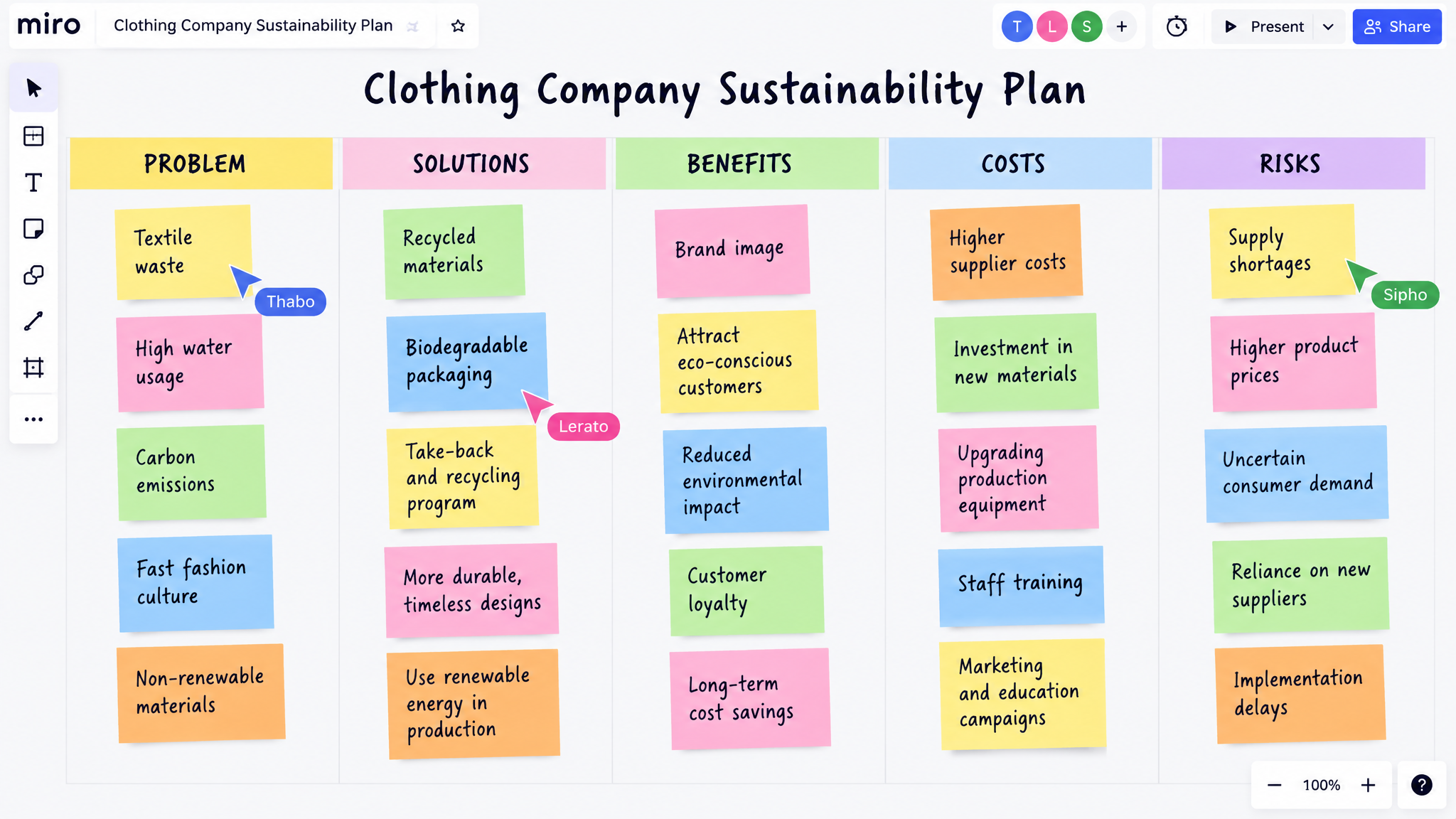
Example of Learner Work
An illustration of how the completed activity looks using the digital Mind Tool.
MindTool Characteristics
How this activity demonstrates the three defining features of cognitive tools.
Representation
Shared documents, sticky notes, and collaborative boards externalise the group's collective thinking into visible, editable formats that all members can see and contribute to simultaneously.
Distributed Cognition
Cognitive work is distributed across multiple group members and the digital platform. Each participant brings unique perspectives, and the platform serves as a shared cognitive space for recording, organising, and refining ideas.
Interactivity
Group members actively comment, vote, edit, reorganise, and build upon each other's contributions. The platform enables real-time interaction that deepens collective understanding.