Activity 6: Corporate Social Responsibility (CSR)
Business Studies Grade 11
Activity Purpose
To engage learners as sustainability consultants who collaborate using digital platforms to analyse, evaluate, and design an action plan addressing textile waste and plastic packaging concerns for a clothing company.
Learner Engagement
Working in groups as sustainability consultants for EcoTrend Clothing, learners use Padlet or Miro to collaboratively address textile waste and plastic packaging concerns, moving from problem analysis through to a detailed action plan.
Teacher Role
The teacher presents the EcoTrend scenario, organises consulting groups, monitors collaborative work, facilitates evaluation discussions, and assesses the quality of action plans and collaborative process.
Digital Tools
Padlet or Miro (collaborative action planning platforms)
Activity Brief
Scenario: EcoTrend Clothing , A clothing company facing growing concerns about textile waste and plastic packaging. Groups act as external sustainability consultants hired to develop a CSR action plan.
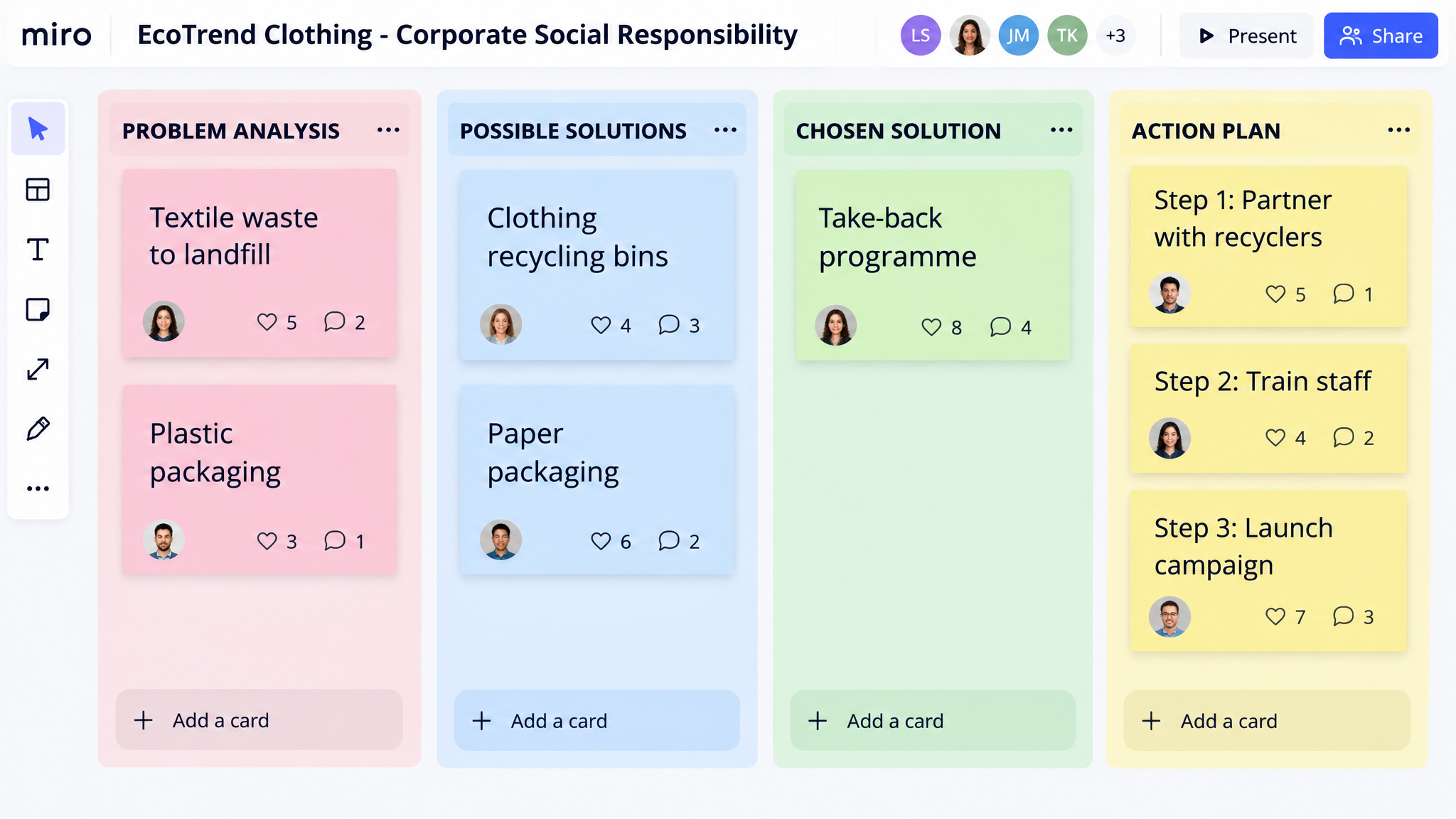
The collaborative platform is structured with four columns that guide the thinking process:
- Problem Column: Identify and describe the specific CSR challenges (textile waste, plastic packaging, environmental impact)
- Solutions Column: Brainstorm potential interventions and strategies
- Evaluation Column: Assess the feasibility, cost, and impact of each proposed solution
- Action Plan Column: Create a detailed, prioritised implementation plan with timelines and responsibilities
Groups use the platform\'s interactive features (posts, comments, votes, edits) to collaborate, reaching consensus through structured dialogue and evidence-based evaluation.
Example of Learner Work
An illustration of how the completed activity looks using the digital Mind Tool.
MindTool Characteristics
How this activity demonstrates the three defining features of cognitive tools.
Representation
The Miro/Padlet columns structure represents the problem-solving process visually: Problem → Solutions → Evaluation → Action Plan. Each post, comment, and link externalises individual and collective thinking.
Distributed Cognition
Cognition is distributed across group members (each bringing unique perspectives), the digital platform (organising and preserving ideas), and the structured column framework (guiding the thinking process).
Interactivity
Learners create posts, comment on others' ideas, vote on preferred solutions, edit and refine recommendations, and collaboratively prioritise actions. The platform enables rich, multi-directional interaction.